
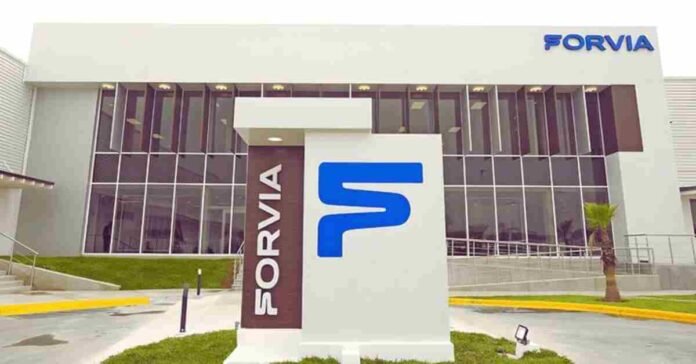

French automotive technology giant Forvia has struck a significant agreement to sell its Interiors Business Group to funds managed by Apollo Global Management in a transaction valued at €1.82 billion ($2.13 billion). The deal, announced on April 27, 2026, marks one of the notable divestitures in the auto components sector this year and is expected to strengthen Forvia’s financial position while allowing the interiors unit to operate as an independent company.
The interiors business, which includes cockpit modules, door panels, acoustic solutions, and other interior systems, represents approximately 18% of Forvia’s total group revenue. It employs more than 31,000 people worldwide and generated €582 million in adjusted EBITDA for 2025. The enterprise value of €1.82 billion translates to a 3.1x multiple of that EBITDA figure.
For Forvia, the sale is a strategic milestone in its IGNITE transformation plan. By divesting the interiors division, the company aims to sharpen its focus on higher-margin, technology-driven segments such as electronics, seating, clean mobility, and smart systems. The transaction is projected to reduce Forvia’s net debt by at least €1 billion after accounting for minority interests, working capital adjustments, pension items, carve-out costs, and taxes. This deleveraging move is expected to enhance the company’s financial flexibility amid ongoing industry shifts toward electrification and software-defined vehicles.
Apollo, one of the world’s largest alternative asset managers, views the acquisition as an opportunity to establish a standalone global leader in automotive interiors. The private equity firm has a strong track record in the automotive sector, with previous investments including companies like Tenneco and TI Automotive. Once the deal closes, the interiors business will benefit from Apollo’s operational expertise and capital to pursue growth opportunities independently.
The transaction is structured as a complex carve-out, requiring separation of operations, systems, and personnel from the parent company. It remains subject to regulatory approvals, employee consultations, and other customary closing conditions. Both parties anticipate completion in the second half of 2026.
This move comes at a time when traditional auto suppliers are under pressure to optimize portfolios. Rising costs, slower-than-expected EV adoption in some markets, and heavy investments in new technologies have prompted several suppliers to streamline operations. Forvia, formed through the merger of Faurecia and HELLA, has been actively reshaping its business to align with future mobility trends.
Industry analysts see the deal as positive for both sides. Forvia’s shares rose around 3.5% in early trading following the announcement, reflecting investor approval of the debt reduction and strategic refocus. For Apollo, the acquisition adds a large-scale industrial asset with global reach and a stable service-oriented revenue stream from existing vehicle platforms.
The interiors segment remains essential to the automotive value chain, as consumer demand for comfortable, connected, and premium cabin experiences continues to grow. Features like advanced acoustics, sustainable materials, and integrated displays are becoming key differentiators for automakers. As a standalone entity under Apollo’s ownership, the business may gain greater agility to invest in innovation and expand partnerships.
This $2.1 billion transaction highlights the continued appetite of private equity firms for quality carve-outs in the automotive industry. It also underscores how major suppliers are repositioning themselves in response to evolving industry dynamics, including electrification, autonomous driving technologies, and sustainability goals.
As the deal progresses toward closure later this year, it will be closely watched by stakeholders across the global automotive supply chain. For Forvia, the divestiture represents a decisive step toward a leaner, more technology-focused future. For the interiors business and its 31,000 employees, it signals a new chapter as an independent player backed by a powerful financial sponsor.
The agreement adds momentum to the resurgence of large-scale M&A activity in the automotive and industrial sectors in 2026, even as companies navigate economic uncertainties and technological disruptions.

