

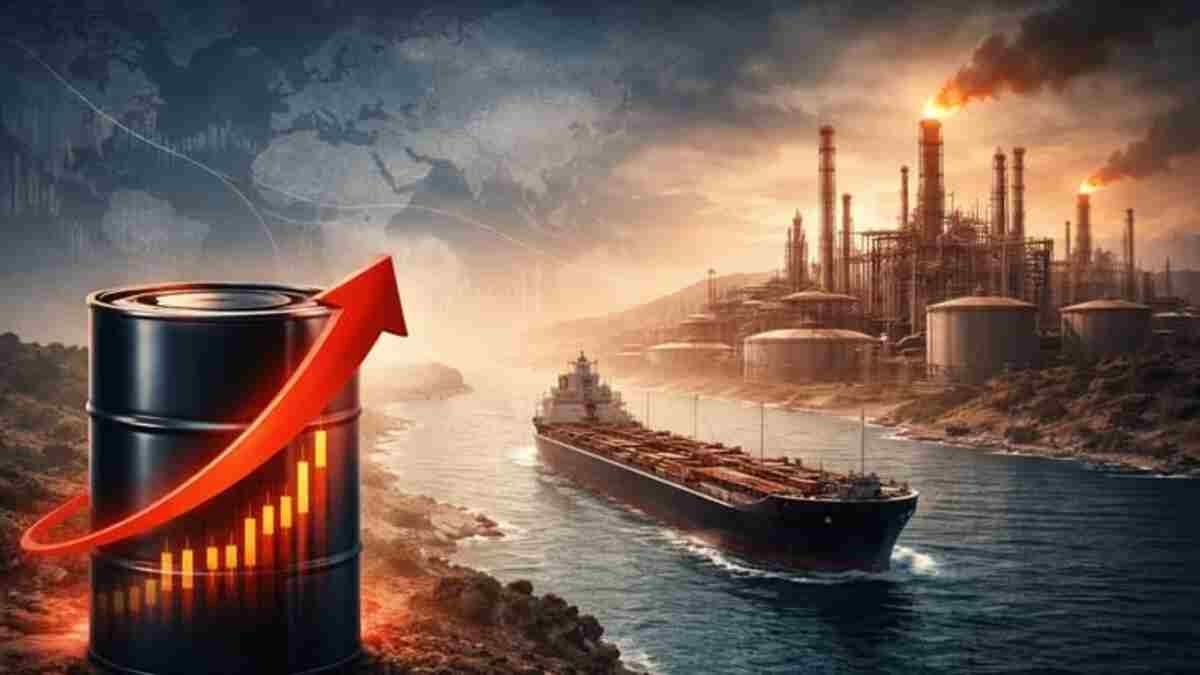
Global oil markets are once again under stress following this week’s surge in crude prices past the 100-dollar psychological level, a major psychological milestone. This increase is taking place against a backdrop of further disruptions in shipping lanes through the Strait of Hormuz that are related to the expanding conflict between Iran, the US and other regional actors. This issue is something familiar to many who are facing higher gas bills as well as businesses dealing with an ever-increasing energy bill.
For decades, the Strait of Hormuz has been considered one the most vulnerable energy routes in the world. Only about 20 percent of global oil trade is carried here Though the mere fact of shipping being stopped at a place so narrow between Iran and Oman is enough to drive markets wild. Any time this is the case, people rush to stocks for refuge. Recently, there were several reported vessel attacks in this region, and the military activities there have definitely increased. The biggest change But is in the insurance cost for ships that sail the area. Market participants claim that lower-than-usual number of ships in the strait, fear of more confrontation, and the possibility of further conflicts have all added up to make supply tighter, while demand from summer in many places has kept on going strong.
Energy analysts argue that a whole range of incidents over a long period have added up and made the situation more tense. The risk for commercial shipments has increased following the activities of Iranian-connected forces in adjacent waters and the Houthis. Concurrently, ongoing US military presence in the region at large is a cause of anxiety. In response to that, the market is now factoring in rising uncertainty rather than looking for confirmed supply cuts. Futures oil contracts surged on both New York and London exchanges as benchmarks crossed levels that hadn’t been seen before in a while.
But, the price spike on the exchanges is not the only result. Gas prices at pump are increasing in several major economies, as well, and the trend of rising prices is expected to continue in the near term. Aircraft fuel buyers are checking their fuel hedges. The shipping industry is looking to adjust its cost by route. Manufacturers that use petrochemical feedstocks are also preparing for a possible rise in running costs. In those countries that rely on their energy imports, a growing oil price measured in dollars will only put more stress on their local currencies and consumer budgets.
Still, the scenario is quite complex as not all ships have been stopped, and some have found a way past the area with protection or have changed the route altogether. The Gulf’s oil producers that are beyond the area, at least one, have indicated a willingness to go up in production Yet how quick the reaction would be, is a matter of debate. The oil reserve stocks of the US and other countries, which are a form of a safety valve, on the long-run could not cover the whole problem as it is not only about a quantity issue, a supply issue, but also politics when a resource like oil is in limited supply.
that experts in the oil business often comment that reaching over 100 dollars for oil prices brings forth a combination of both economic and political issues. The hike in energy costs might push up general inflation in a situation where many central banks are still coping with the impacts of earlier commodity inflation waves. Besides, Governments in the midst of elections or dealing with discontented populations due to the cost-of-living issue, could find themselves compelled to take a stance through diplomacy, the mobilization of reserves, or even an aggressive transition strategy towards other types of energy.
Ordinary individuals, for their part, are more focused on the present and the concrete aspects of the situation. It is often true that a rise in crude prices can be noticed almost immediately at gasoline stations. For instance, a family that is on the lookout to save for a nice holiday summer break, a farmer contemplating the cost of harvesting, or a small business owner calculating a delivery charge, will all see the difference. In areas where access to public transport is limited, the consequences will be even more pronounced.


